Showing posts with label review. Show all posts

Wednesday, August 26, 2015

Fort Meow (Game Review)

The concept of Fort Meow is just too adorable to pass up. A unique cartoon style of physics-based tower defence as you build a fort out of various household items to defend Isa from the cats that desperately want to sleep on your lap.

Fat Cat incoming!
Isa goes to spend her school holidays with her grandparents, only to arrive to an empty house. Not surprising as her grandfather in having surgery at the hospital. So Isa heads up to the attic, her favourite place in the whole house to go treasure hunting. She finds her grandfather's journal and begins to read, but suddenly a cat jumps on her lap, stopping her from reading. There are more cats coming, desperate to stop her from reading her grandfather's journal. Why are there so many cats and why are they so desperate to stop her? The story is quite cute and does a good job of at least giving some sense of progression in the game, though overall it's not that compelling.

The real driver of this game is the physics-based gameplay. You have to construct a fort out of various household objects using a limited amount of resources cleverly designed as 'time'. You're not actually on a time limit, but it reflects how long it takes to get each item. You can only have a limited number of each item and everything has various hit points and special abilities. Items range from simple objects, such as pillows and tough coffee tables, to more exquisite items such as the foam dart launcher and washing basket. The various kinds of cats that the game has (six in all) will force you to change tactics. Fat cats are very destructive, requiring you to place bean bags to repel them. Melon cats come low and fast, taking out the sides of your fort in an effort to bring your whole structure crumbling down. To me, the best part of this game is the fort building and watching as it attempts to withstand the cat assault. You can't do much except use some special items during 'Defence Mode', which makes watching the assault that much more nail-biting.

Explore the house to unlock new items for your fort.
In all, Fort Meow just encompasses everything in a perfect little package. It plays directly into your childhood (or adult) fantasies of fort building all while in a well-drawn cartoon style. Everything is just done so well, but the game is short. I finished the story in about three hours and spent another three unlocking all the achievements. I felt that the value you get from it was worth it's asking price of $8 and I definitely had a lot of fun playing Fort Meow.

Monday, May 4, 2015

The Order: 1886 (Game Review)


Set in an alternative steampunk England that is governed by The Order, a legion of knights based after King Arthur and the Knights of the Round Table. Having found the Holy Grail, they have achieved a sense of immortality by using Blackwater, a liquid that prevents aging and heals wounds with amazing speed. As a member of The Order, you play as Sir Galahad, sent to deal with a growing uprising of rebels against The Order and the Monarchy. Things aren't as they seem as some of the rebels are lycans, humans that can turn into werewolves.


The plot thickens later and becomes the usual ordeal of rebels actually not so bad, corruption in government and vampire subterfuge. The story is decent, but it plays it safe and doesn't make any surprise twists. It progresses slowly though, and it feels very drawn out. Despite being cliché, the story does hold the game together well and is engaging enough to not leave you bored.

Visually, the game is amazing. It clearly demonstrates the graphics power of the PS4 and is amazing to look at. It has the grungy look of 1886 London, but the steampunk design adds a flair of colour and brightness to most levels. The motion capture and character design is probably the best feature of the game. It is amazing and beautiful to look at, completely faultless.

If I had to compare the combat system to another game, it would be Gears of War. It is incredibly similar, warts and all. Right down to the cover system, health regen and combat variety. It doesn't hurt the overall experience, but it doesn't help it either. It tries to do other things, like stealth sections and environment exploring, but it's spread far too thin. The stealth is a clunky quick-time event charade and the environment is messy and cluttered and I often couldn't find my way. The detail put into some areas that were completely inconsequential was astounding. I walked into a room that was so well detailed, but didn't lead anywhere. It was confusing and annoying to repeatedly get lost because of an over-complicated environment.


Although it features vampires and werewolves, it sadly overlooks any unique encounters with these creatures. Werewolves do a hit-and-run tactic repeatedly, easily overcome by sitting in a corner and waiting for them to charge you. The elder werewolf encounters are reduced to a quicktime fight, and the only werewolf you actually kill is trapped inside a cutscene. You will kill lots of human enemies though, oh so many. The AI is pretty average by today's standards, and it's easy to predict their movements. Shotgunners will charge you, snipers will sit at the back and everyone else runs for cover or tries to flank. Combat encounters are broken up with short environment crawls or cutscenes, often completely ruining the pacing.

The game wants to show you how pretty it is really badly. You can look at inconsequential pieces of paper, closely examine items in your hands or listen to audio recordings. I was so bored by the jarring and slow pacing that I ignored the audio files, eventually stopped looking at the papers and yelled in rage every time I was forced to spend ten seconds looking at something in my hand that I didn't really care about.

Visuals and mediocre story is the only thing holding this game together. Even with that said, the game gives a giant middle finger when the story ultimately doesn't resolve in any way and finishes with a disappointing quicktime fight. The combat is more of the same, but is horribly broken up by bad pacing and illogical encounters. I hated playing The Order so much, but thankfully you never have to pick it up again since it has no replay value, unless you're a completionist, in which case I feel sorry for you.

Thursday, April 9, 2015

Dying Light (Game Review)


The zombies are back, or rather, they never really left 'cause of the whole 'undead' thing. Anyway, you know a really good way of dealing with zombies? Apparently parkour is excellent for escaping the undead hoards. If you currently aren't in the middle of a zombie apocalypse nor have the agility to learn parkour, then Dying Light is for you!

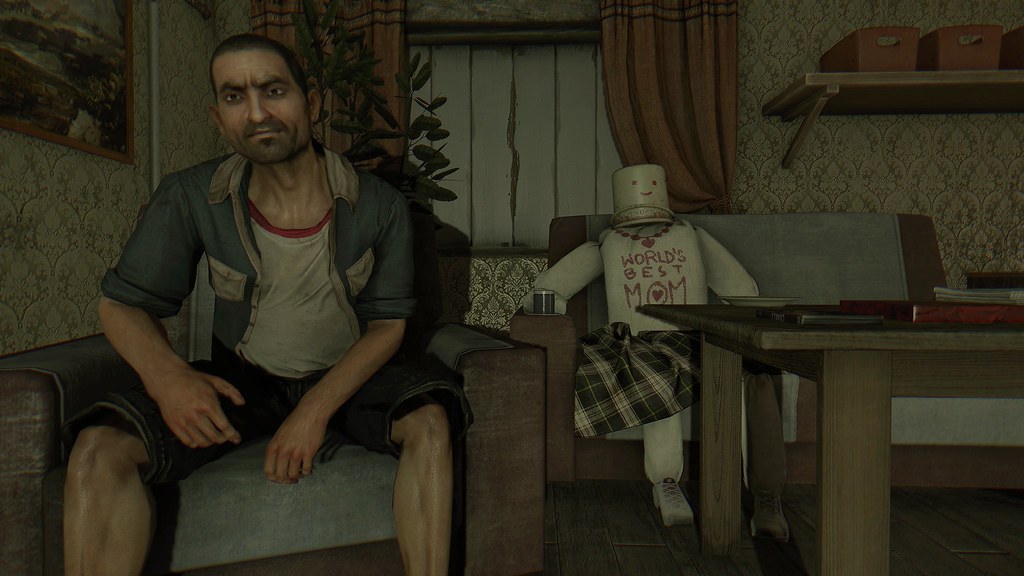
He just wants a hug, but give him one and his heart will pop!
As an agent for a government agency called the GRE (I never actually learnt what that stood for) you play Kyle Crane, a somewhat competent agent who is sent into the zombie infested city of Harran to recover a stolen file which contains something sensitive about the virus and/or cure which is being held by a vicious dictator. Minutes after being deployed, Kyle fucks up royally and is saved by the local survivors and scavengers. The entire premise is rather long-winded and most of what happens is simply a staging point for the actual story which a much more interesting man-o vs man-o war of personalities. When I say more interesting, I mean slightly less stereo-typical than its starting ideas.

For once, it's nice to play a character that has clear morals and intentions, who isn’t a two dimensional canvas for you to project yourself on. Kyle has real and well expressed emotions and reacts to situations like a 'normal' person. He scoffs at stupid fetch side quests, mocks idiots and has compassion for those who are suffering. It's been quite a while since I've seen such a well-developed character as the player character. The rest of the cast is nowhere near as developed, almost as if Kyle Crane got all his personality by sucking it out of everyone else like some hipster vampire. Everyone is replaceable and stock standard, even the main villain. The story and characters were predictable and the ending was rather lacklustre, though gratifying. I was climbing the ladder to meet the villain in a final showdown and I openly said "I feel a quick-time event waiting at the top of this ladder". I was right, which was disappointing.


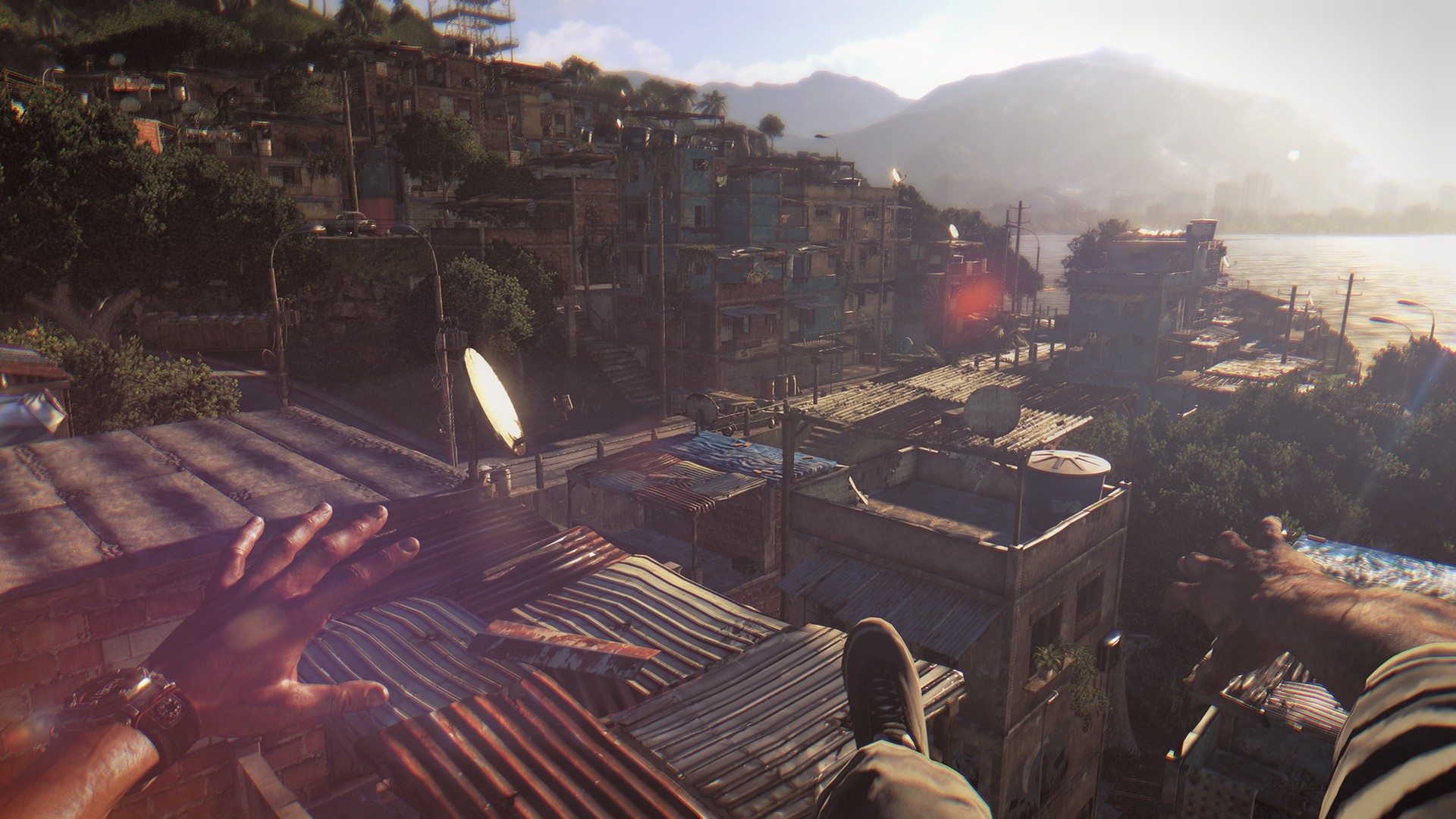
But who cares about the story when there's a city full of zombies to chop into pieces? The game, made by the Dead Island developers, features their signature combat style of 'aim and swing'. You can take to the undead with a variety of clubs, hatchets, axes and swords, all can be upgraded with a variety of 'blueprints' that add extra effects to weapons. These are made by collecting crafting pieces in the environment and can increase a weapon's durability, handling or power while others add fire or electricity damage. While it is extremely satisfying to make a poisoned weapon make those annoying human enemies vomit their guts up, it's not all that realistic and did make it feel more of an arcade game. Over time, you learn a range of new skills that makes dispatching zombies easier, but that is where I found a problem with the difficulty curve. The game is brutal hard early game as you lack the abilities to deal with enemies fast before they overwhelm you, but once you get those skills then the game gets far easier. The introduction of other zombie types shakes things up, but not in any new or interesting ways. Perhaps the most unique feature is the day/night cycle and the nasties that come out at night. Initially, these zombies are fast and dangerous, but they lose all their thrill once you gain parkour skills. It feels wrong that a game simply gets easier as you play through. There are firearms, but they don't play a major feature until nearly all human enemies start to use them. Dying Light is a bad shooter. I don't even want to talk about how bad guns are.

The feature point of Dying Light is the parkour system. First-person free-running hasn't really been tried since Mirror's Edge and Dying Light certainly makes big steps in the right direction. It's still horrible trying to navigate a climbing section in a first-person camera, but it is satisfying enough to make it a lot of fun. Again, levelling up skills makes using the parkour even easier. It really feels like you become a hero among the mere mortals as you become so overpowered that it becomes borderline boring to play. Oh, and then you get the Batman grapple gun. Yeah. I feel that a lot of the skills are interesting to use once or twice, but you'll always revert to your simple ones. Being able to make shields, boosters and throwing weapons never felt necessary, and in fact, I never used them. I think it got to the point where they were adding skills to pad the oversized skills tree.


In the end, I found Dying Light a lot of fun to play. Not for the story, but because running around being the equivalent of Batman in a zombie game is bloody awesome. I didn't feel a sense of completion when the story ended, I just wanted to kill more zombies, which I did for a few days and then finally got bored with no missions to do. I honestly feel like I could single-handedly just kill every zombie in Hassan and end the whole disaster. I tried to do that too, but then night time came and I fucked up all the mutant zombies. I looked over the square full of body parts and thought about what I was doing. "Screw this, just nuke it" I said, and quit.

Note from Editor: I couldn't review the multiplayer content at the time of writing, but Dying Light also supports a coop system and an online player vs zombie player mode.

(Reviewed on PS4)

Saturday, February 7, 2015

Pixel Puzzles: Japan (Game Review)

At least you can stop that stupid bamboo thing with the fish now. Just stick it right on in there.

Find a picture that seems somewhat Japanese, turn it into a jigsaw puzzle of between 60 to 200 pieces, put all the pieces in a pond with a fish, take relaxing music and put it on a short repeat, get one of those bamboo water features that clunks every few minutes as it fills with water and finally a mouse that does not click where you want it to. That’s Pixel Puzzles: Japan!

As a digital jigsaw puzzle game, it offers 19 puzzles for you to complete. The puzzles are decent pictures of varying difficulty. They scale between 60 to over 200 pieces in varying styles and shapes and can take anywhere from 20 minutes to a few hours depending on the number of pieces and how difficult the picture is (especially the ‘Cherry blossom over water’ puzzle, OMG!).
 
'Cherry Blossom Over Water' - I want to burn this puzzle till the end of time.
That’s where I run out of anything good I want to/can say about this game. The puzzle pieces float around in a pond on the edge of puzzle. I think this was a good idea as it simulates digging in a box to find the pieces, but it was horribly executed. In the higher piece puzzles, the pieces are so small and numerous that it becomes exceedingly difficult to find the piece you want as they float around and behind other pieces. On top of that, the game is insistent on grabbing every piece but the one you want. The game doesn’t seem to know how the mouse works. If you pick up a wrong piece and drop it back in, it always reappears in the same spot in the pond, regardless of where you dropped it. This is bad for two reasons: the first is that the spawn spot gets horribly overcrowded with pieces fast; the second is when you drop a piece, it takes any other pieces it falls on with it. I don’t even know why this is a thing! You can keep pieces on the board as you need them, but without enough space it gets clogged up fast. This is single-handedly one of the most frustrating games I have ever played.

Aside from that, it’s a jigsaw puzzle game, there is nothing else to it. The music wears thin after a while and I ended up muting it and playing my own music instead. Everything it does, it does either ‘ok’ or horribly. I do not recommend this game unless you find real jigsaw puzzles too easy. There are plenty of other jigsaw puzzle programs online that are FAR better than this. Use the Google.
P.S. I have now resorted to doing an actual jigsaw puzzle on my table. I do have to say thanks to this game for driving me away from the computer for a bit.

Monday, January 19, 2015

Among the Sleep (Game Review)

Because what could make you feel more vulnerable than playing as a defenceless toddler? Next time we’ll be playing as a fetus.

Among the Sleep is a linear puzzle platformer with a touch of survival horror. Let’s get one thing straight though: this is more an interactive story than a game. It plays on a story that pieces itself together as you progress, dropping hints along the way if you pay attention enough. Puzzles are simple at best, usually simple physic based puzzles or finding an item or items to proceed to the next area. I did not find it challenging and puzzles were not particularly unique or interesting.


Among the Sleep describes itself as “a first person horror adventure” game. I don’t completely disagree, but it is more of a dark fantasy adventure game with adult themes. It reminds me more of the original Alice in Wonderland books with their dark, twisted fantasy. I liked that it aimed less for jump-scares and provided more psychological horror; being a small two year old gives you a real sense of helplessness. The survival parts were mostly you avoiding monsters by hiding under or in objects, but these encounters were easy and few. The screen distortion when looking at monsters was a good accompanying effect that kept monsters from being simply looked at, which I find reduces their horror effects.

Despite the simplicity, the puzzles and levels were well designed and thought out. Each chapter was unique and interesting; I can definitely say I never got bored of playing it. It did lose strength towards the end, but the story picks up when the level design begins to wear itself out. The story itself is well written and implemented into the game. It provides an interesting perspective at domestic and substance abuse, though this is not a unique idea (see Papo and Yo).


The free DLC is a short bonus level that is supposed to be a prologue, but doesn’t really contribute much to the story. Overall, I got two hours of play out of $20, which to me is a little overpriced. Among the Sleep is an interesting game that is unique to play, but won’t really leave a lasting impression.

Friday, January 9, 2015

Karin (Anime Review)

Recommended for Mature Audiences : Contains blood, low-level violence, adult themes, sexual references

Also known as Chibi Vampire, Karin is a 24 episode anime based of the manga of the same name. Karin Maaka is a highschool girl who also is the middle child of a family of vampires that moved to Japan hundreds of years ago. Unlike her kin however, Karin is an abnormal vampire in the fact that rather than suck blood, she produces blood. She has to bite someone and inject them with the blood periodically or it builds up until she suffers one of her explosive nosebleeds.


The plot is nowhere near as deep as the manga’s and the anime prefers to just take you for a ride. The story ebbs and flows around many topics and arcs, introducing new characters and creating backstory at various points. There is no real build up or climax, just a journey towards Karin and Kenta’s confession of love. That’s not to say it’s a long, boring love story, rather the opposite. It’s fun and extremely enjoyable all the while having this overhanging sense of despair at the complications of a vampire-human relationship. Characters are deep and meaningful, and even those that aren’t are still lively. In one particular scene, two thugs are beating a character up and although they only get a minute of screen time, you’re still left with some degree of understanding of their characters. The series does eventually peak and the last few episodes were enthralling, but there is no real conclusion, as there was none to be had in the first place.


Despite the intro theme, with a rather lackluster song, Karin has very little fanservice, which begs the question of why they went with that introduction. There are a few scenes that perhaps go a little too far, but the anime was always meant for mature audiences. The art looks great and, although a little gritty at times, the characters look amazing. I can’t say it really performed well on the audio front, there was little more than ambient sound which was sparsely used.


With no real climax, Karin is an anime that you have to just sit back and enjoy the ride. With that said, you have some amazing and well-rounded characters to accompany you, so it really is a ride worth taking. There are no bad episodes in my opinion, some are average and contribute little to plot or characters, but most are fun and enjoyable. It catches you within the first episode or two.

Sunday, January 4, 2015

Superfight (Product Review)

Can the three stories tall United Nations who can shoot lasers from their eyes beat in a fight the Secret Agent who has sticky bombs and can run 200mph but only in a straight line? Will Chuck Norris in a tank with the ability to shoot blinding light from his hands beat Canada, the top half whom are Spartans and can steal abilities with a touch? All of this and more (including a fainting goat that really needs to pee) can be debated, argued and more in Superfight, an epic card game about pitting impossible characters in impossible scenarios.

Cue epic showdown.
Pick the player who goes first then the person to their left is the first opponent. The first player draws three white cards which are characters and three black cards which are abilities. They pick one of each and put them face down, the rest get discarded and the second player does the same. Then both players draw another black card which they must use. The players reveal and then the fight begins. Each player must argue why their character would win and then after much deliberation, the table votes. The winner continues the fight while the loser discards their character and the next person in line becomes the new opponent. The winning player gets a point, and if their character wins three fights in a row, the character becomes ‘retired’. In the event of a tie of votes, both players draw a single white card and those two characters must fight each other with no abilities, this continues until there is a winner.

It’s a lot of fun and the combinations can be hilarious and broken at the same time. Some characters can be so overpowered (hence the retiring rule) but even then, something might come along to knock them off their pedestal. Some are downright dumb and useless, while others are legitimately debatable. We got into a fifteen minute debate about wether fifty giant squid that could spit neurotoxin could beat a hundred dragons that could create holograms of themselves. Although the opponents are supposed to argue for their characters, we found that the whole table got involved, which made the experience so much more enjoyable.

Superfight is what I wanted Cards Against Humanity to be. I found CAH just too much of a competition on who could be the worst person in the room. Superfight is inspiring and creates amazing discussions between friends all the while giving everyone a laugh.

You can order the colossal 500 card starter deck from their website for $35USD. You might also like to look for it on other sites, i.e. Thinkgeek.

Thursday, January 1, 2015

Just a Quickie - Flight Control HD

If you feel like sitting back and being in charge, why not be in charge of the busiest and most uncoordinated airport in world? Welcome to Flight Control where you must guide coloured planes to their respective runways without killing hundreds of people, I mean, crashing the empty planes. Wait, then who’s flying them? Remote autopilot, yeah.


The game is as simple as clicking and dragging a path for the plane to take to get it its matching coloured runway, but it quickly becomes much deeper than that. Different maps have different aircraft, each varying in size and speed. Helicopters are slow while big jumbo jets are bigger and faster than their smaller counterparts. You have to juggle seaplanes and light aircraft alike in a sky that becomes more congested than a freeway in peak hour.

There are lots of maps to try; some have unique features that will change how you prioritise your aircraft. One map has emergency landings where planes come in that you can’t control. Others have shifting wind conditions that make some runways unusable while another has stunt aircraft that you must fly through cones to earn points.

There is enough variety and enjoyment to be had for hours as you challenge yourself to beat your own high scores. It is another one of those games that is simple to play, but hard to master, especially when you’ve got a dozen aircraft queued and three warning sirens of potential midair collisions going off.

Thursday, December 25, 2014

Breachers VS Kickers (VS Game Review)

“Peace is not my profession, it’s yours. War is my profession. Should you fail at my job, I will not fail at mine.”


There are now two games that are filling the same category of tactical strategy in similar yet very different ways. Breach & Clear and Door Kickers both offer deep tactical gameplay in a very decent package. While there are other games that also offer similar gameplay, these two I consider more viable candidates for a face-off due to their similarities yet completely different approaches. Keep in mind that although Door Kickers has left Early Access on Steam, it is still being actively updated by the developers while Breach & Clear has been fully released and its developers are focusing on their next game Deadline. As such, both are being judged as-is and there will be no hanky-panky nonsense! FIGHT!

Door Kickers brings us a SWAT style approach, with units being various classes of the local police force. Your platoon of ten units starts at the humble pistol wielding Pointman, an effective agent in close quarters. As your squad levels up, you’ll unlock the Assaulter, Breacher, Stealth and Shield classes. Your troops level up separately from your squad as you use them and as they perform actions in missions which increase their stats.  Each class provides tactical choice, as you can change each as you please. The various missions will provide different challenges and environments ranging from large open areas to tight hallways. Your squad choice and formation can have serious ramifications on the outcome. There is a large and dynamic array of equipment to unlock by earning stars on missions, with each class having different sets of weapons. You’ll also need to unlock the dynamic hammer and the bolt cutters to get through those pesky locked doors faster. Door Kickers gives you a significant amount of freedom and customisation, allowing you to adjust your squad mission to mission.

Breach & Clear: 3D goodness with a more reliable control interface.

Breach & Clear offers a more militaristic style, allowing you to design your four man hit-squad. You’ll designate the classes of your squad when you first create them, selecting from one of the six classes including medic, leader and breacher. Once you set these however, you can’t change them. I found this gave my squad much more personality, each member of your squad had their role and you gave them orders based on their role. Weapons must be bought with cash that you earn by completing missions. Unlike Door Kickers, every class can use every weapon, but you have to outfit each soldier individually. If you want them all to wear heavy armour, you need to buy four sets. You can also customise weapons right down to the parts by purchasing different triggers, gas chambers and attachments like scopes and stocks. Missions offer the same diversity, ranging from tight buildings to wide open fields. As you play, squad members will gain experience and level up. You’ll get points each time they level up to assign to stats as you please and when they reach milestones, new abilities unlock. Breach & Clear is a much more rigid system, but allows you to personalise your squad to your liking, because you’re in it for the long haul.

Breach & Clear goes for a three dimensional design, allowing you navigate the map by rotating, zooming or looking down into rooms. It works well, but I left it in overhead view all the time to be able to look down into rooms easier. Door Kickers opts for a more animated look, with the map locked in a top-down perspective and only allowing you to zoom and move. Visually, Door Kickers looks nicer, but the more realistic look in Breach & Clear has its appeal.

Both games offer fundamentally the same experience, but they operate in very different ways. Breach & Clear lets you give orders in a grid-like system, allowing you to order your squad to specific grid spaces. This system is useful as it allows you to see exactly where your men can and can’t go. You can set orders along the path as well, such as which direction they should face or throwing a grenade when they reach that grid square. Door Kickers has a more liberal approach, allowing you to freehand draw paths and actions. It also lets you adjust orders on paths, giving instructions just the same, but it also features a synchronisation system where units do not proceed until the order is given. This allows you to make a unit wait until the others catch up before moving together into the next area. Breach & Clear operates on five second intervals, where the game runs for five seconds before letting you adjust or issue new orders. When you're ready, the game runs for another five seconds and this continues until mission end. Door Kickers lets you play and pause at will, even allowing you to control and order units in real-time. My biggest complaint with Door Kicker’s system is that is gets messy very quickly. When several paths overlap, it gets difficult to adjust specific orders and you can’t change the position of the path without completely erasing the entire path following the move. Breach & Clear does allow you to do this, but its waypoint system can be a bit temperamental at times. Breach & Clear’s grid system, although much more restrictive in movement, allows units to more effectively employ the terrain. Door Kicker’s cover system is difficult to utilise and not everything provides cover. Breach & Clear allows units to sit next to a doorway and fire around it, something that is not available in Door Kickers. It also clearly shows what your units can see by highlighting grid positions that are both visible to your unit and within maximum firing range. Door Kickers does many things well, but in terms of functionality, Breach and Clear is much more robust in my opinion.

Door Kickers: Pleasing aesthetics in a simpler and better designed system.
Both games offer a large selection of missions and mission types, though Door Kickers does have the larger selection including the map editor and the random generator. Breach & Clear also has a difficulty setting for each level, allowing you to replay each one and earn more stars. Unfortunately, it also has some bad design choices for menu interaction and the odd glitch here and there. Likewise, Door Kickers suffers from the occasional case of units not following orders.

In the end it’s a difficult fight between the two. Door Kickers is more approachable, better looking and easier to use, while Breach & Clear is a more sophisticated game that requires a bit more tolerance to get used to. Personally, I love Breach & Clear a little more, but my recommendation goes to Door Kickers, providing a better, well-rounded experience. Still, there’s no reason you can’t have both right?

And the mobile version of Breach & Clear runs like a potato in mud. Just pointing that out.

Saturday, December 20, 2014

The Multiscreeniverse

One screen to rule them all, two screens to find them, three screens to bring them all and more than that is just crazy.

For most computer users, using multiple monitors on a desktop setup may seem like an unnecessary expense, but many would argue not. There have been many studies that claim having a second monitor can boost productivity of workers by up to 50%. Home users such as myself find that having that second screen opens up the work environment to allow better multitasking and efficiency. Even if it’s just for entertainment purposes it can be incredibly useful. I can run a livestream or video on one screen while working on other projects or playing a game on the other. Most people I know who use two monitors say they could never go back to using a single monitor on their personal computer. The opportunities are endless, but are you using that extra space as efficiently as you could be?

While operating systems and most video cards have native support for multiple monitors, I’ve often had minor teething trouble getting it set up correctly and there is little to no optimisation available. This is where third-party software fills the gap. There are many programs available and I certainly don’t insist on using any one in particular. It’s about finding one that suits your needs and budget. I use Displayfusion (available on their website and Steam) and will use it as an example to talk about features that are useful, and what to look for in a good program. A free version of Displayfusion is available, but you can also use Dual Monitor Tools (free), ActualMultiple Monitors (30 day trial) or any of the other available programs that can be found on the net.

A basic feature that should be found in any good program is wallpaper control. Wether you are using identical monitors or you’ve hooked up a monitor or TV to your laptop, being able to correctly apply your favourite wallpaper in the correct resolution is an aesthetic must-have. Window’s ability to apply wallpapers is shoddy at best, but most programs can apply wallpapers to each screen at its correct resolution. Better programs can use multi-monitor wallpapers that are designed to be displayed over multiple screens or apply different wallpapers to each monitor. I have Displayfusion set to change each monitor’s wallpaper every five minutes. In addition, it can intelligently fit any picture to the screen while maintaining the image aspect ratio, allowing you to not only use wallpapers that don’t match your screen size (example: 4:3 vs widescreen), but also photos and any other images. Displayfusion also offers some other features, such as adding system info to the screen or fine-tuning wallpaper settings, but unless you have some need to micromanage your wallpaper, then these will never be touched.

For those who need more monitor control, monitor configuration controls are where it’s at. Some programs feature more precise monitor control, such as setting individual resolutions and refresh rates, but most graphics drivers have software that does this as well. Both Nvidea and AMD have programs in the control panel to help you calibrate these settings and it is probably best to use those over anything else.

Finally, it is vital to have useful window management tools to help you organise your multiple desktops. Some programs add a taskbar to your additional monitors as well as handy keyboard shortcuts to move windows around your screens. Other options allow forcing a program to launch on a particular monitor, improved window snapping controls and better mouse controls when moving from one monitor to another.


While we’re talking about Displayfusion, I might as well discuss how good it is. It defiantly provides all the features you’d ever need and then some, but unless you like to micromanage your desktops then you won’t use half of the features. It’s for this reason that I think it is overpriced ($30 on Steam) and bloated with features I’ll never use. I picked it up for $10 in a sale, which is a much more acceptable price in my opinion. The free version is a stripped back version that doesn’t quite have all the features you will want and pales in comparison to the other free alternatives. Otherwise it’s a very well designed program that eventually just becomes part of the background and you never touch it again. You do get what you pay for, just hopefully not at the asking price. 

You don’t realise how much you need multiple monitors until you try it. These programs that I’ve mentioned will simply make your experience that much more enjoyable and useful. If you’re like me and you spend a decent amount of time on your computer, you really come to appreciate the both the aesthetic and functional improvements that they offer.

Wednesday, December 17, 2014

Tokyo Ghoul - Season One (Anime Review)

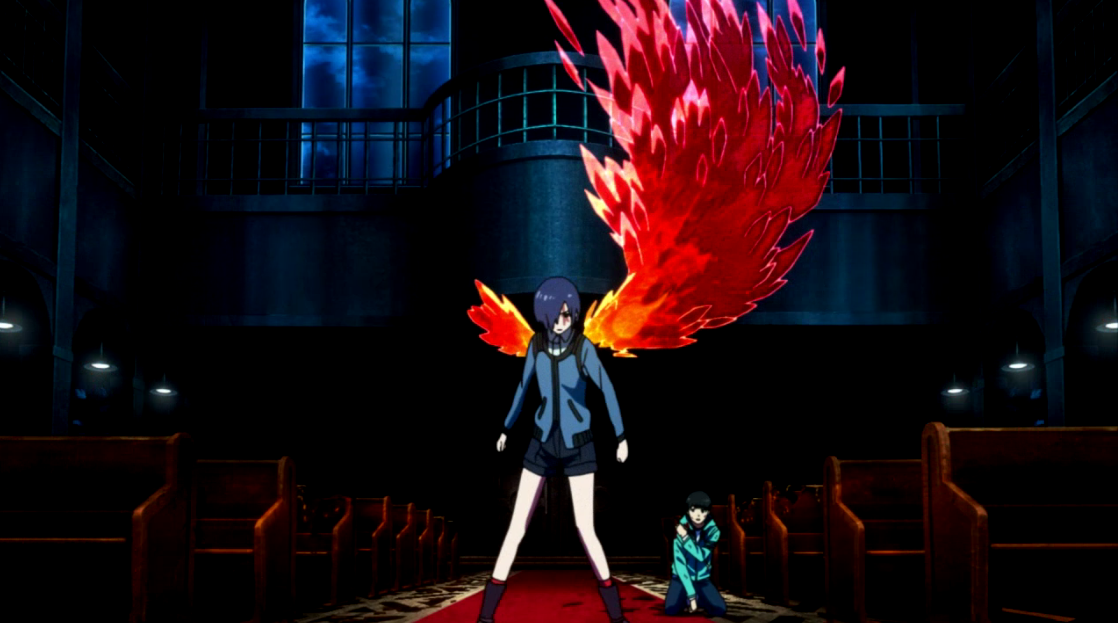
It’s violent, gory and cringe-inducing with a kickass story and animation to boot

(Suitable for Mature Audiences Only : Contains blood, gore, high-level violence, horror, adult themes, torture scenes)

I had a lot of trouble writing this, mostly because I love the anime so much that I don’t want to admit its weaknesses. I even had to watch it twice just to examine it a bit more closely, this time not caught up in the thrill of watching it. Unfortunately, Tokyo Ghoul blew up so big this year that it’s hard to not find pieces of it scattered across the social media cloud, but for good reason. This post only looks at season one and the first twelve episodes. Pretty big spoilers ahead, but as usual, I’ll try not to reveal big points.


Kaneki is the protagonist; an 18 year old university freshman who has a crush on a girl who frequents a local coffee shop that he goes to. After a date, Keneki walks Rize home and down an alley, it’s here that she reveals her true identity. She is a ghoul. More accurately, she is a binge-eater, a ghoul with a sadistic urge to kill and eat unnecessarily. Kaneki is no match for Rize and is close to death before falling construction materials crush Rize. Taken to hospital, Kaneki receives transplanted organs from Rize and, upon release from hospital, realises he has become a half-ghoul with only one affected eye.

Season one focuses on Kaneki and his struggle with being half human and half ghoul. He fights his ghoul side and tries to remain as human as possible. No longer able to eat human food, he must adapt to eating human flesh or be consumed by the insatiable urge to kill and eat people. He is ‘adopted’ by the local ghoul population in his district and he goes to work in a coffee shop which also serves as their headquarters. They teach him how to live peacefully and not kill to eat. Ultimately, the series concludes when he accepts the ghoul within him and embraces it to become strong enough to fight back.


Even I have to admit, most of the first season features a very whiny and miserable Kaneki. Every episode throws him in new and horrible situations; fighting with his urges to eat, learning the grisly nature of ghoul life or finding himself in the hands of the most bizarre and unpleasant characters imaginable. The story was very well written and despite the censoring (was censored for TV, DVD release will probably not be) the animation was excellent and enthralling yet would still easily make most people cringe with its gory scenes. The best thing I can praise it for is the character development, which most of the episodes focus on. Characters are deep and interesting, even making you sympathetic for initially hated characters. All the main characters are strong yet flawed and have more than just good voice acting, they have actual character. I find that this is a trait that is sorely missed in much of today’s media.


Aside from also having one of my favourite opening themes of all time, Tokyo Ghoul is a fantastic anime starting from episode three. Personally, the first two are slow compared to the rest and feature too much of the wingy side of Kaneki; you just wish he’d get over it. Fortunately, even the other characters agree and berate him for acting so. I am eagerly awaiting the season two release, due early next year, and hoping it remains consistently as good as has been so far. 

Saturday, December 13, 2014

Just a Quickie - Floating Point

Between shooting people in Counter-Strike and crawling your way through the nightmare that is Binding of Issac, sometimes you just need something to bring the nerves back to earth. Floating Point gives you a dot and a grapple and the goal of collecting as many points as possible.

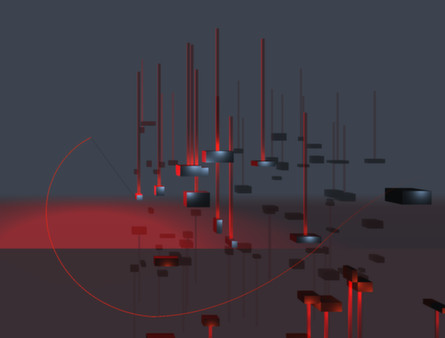
Half the level is above the water and half below, switching physics on each side. Get points by hitting the red bars with as much speed as possible and avoid hitting the blocks. Once you've collected enough, you can progress to the next level, each becoming busier than the last.

Floating Point can be picked up and dropped in seconds, making it the perfect game when you've got a few minutes to kill. It’s simple and it becomes a skill to play in itself. I've clocked up a bit of time in it already, but that comes from many two minute sessions. It’s also free, so why aren't you downloading it already?


Thursday, December 11, 2014

11eyes (Anime Review)

Because nothing says 'I hate you' more than a razorblade in their tea.

(Suitable for Mature Audiences Only : Contains blood, violence, supernatural themes, adult themes, sexual references, mild sex scene)

11eyes a twelve episode, single volume anime based off the visual novel ‘11eyes: Tsumi to Batsu to Aganai no Shōjo’ (11eyes: Sin, Damnation, and the Atonement Girl). It has a relatively complex story that is difficult to talk about without spoilers, so read ahead at your own risk.

The hero of the story is Kakeru, a high school boy who wears an eyepatch for a reason that was never explained. He spends most of his time with his romantically entwined friend Yuka, and the two of them happily enjoy their high school days. Until one afternoon, they are suddenly and mysteriously plunged into a dimension called the Red Night. A mirror dimension of the world, the Red Night is virtually the same as the world above, except that it is inhabited by monsters. In the centre of this dimension is a temple where a witch lies trapped within a crystal, guarded by six warriors known as the Black Knights. Repeatedly and daily thrust into this alternate dimension, Kakeru and the other students who also are dragged into the Red Night must discover why this is happening and why the Black Knights are so eager to kill them.

The plot in 11eyes is not difficult to follow and is reasonably well written, but it has holes. Lots of holes. 11eyes started as a virtual novel for the PC, an interactive fiction game, and it has been rewritten for anime form. I have not played the game, but from my study, I do know that there are some major plot differences between the two medias. The anime’s hook is that the main characters do not know what is going on, slowly revealing shreds of truth to keep you watching. The characters discover that they have powers, Kakeru in particular has the greatest power, known as the Eye of Aeon, under his eyepatch. As they kill the Black Knights one by one, they slowly discover who the knights are and their purpose, but far too late.

I won’t go into the story much further as it starts getting complicated and the holes really start to show. The last four episodes is where all the explanation and conclusions begin, but they leave so much unexplained. Many times it simply told you a fact expecting you to swallow it whole without any gravy. What’s more, if the Black Knights had simply explained anything then things probably wouldn’t have gotten as bad as they did. The story has its good moments, and throws a twist or two in, but the sheer amount of inconsistencies left me feeling more frustrated than satisfied by the end.
The six Black Knights. Possibly more relatable than the main characters.
The anime really stands out with its soundtrack and is possibly one of the best sounding anime I have had the pleasure of listening to. It was immersive and was a stronger hook at times than the story was. The visual design was average, but there were some excellent scenes that stood out. Overall, the visuals complemented the story well and I couldn't complain. Also beware of some minor fanservice.
 

At the time of writing, I have not yet watched the OVA. However, it is not a continuation from the story and rather is a sexually explicit parody of the main characters (because why not). I enjoyed 11eyes despite its bad transition from game to anime and, thankfully, it is short enough to not wear out its welcome though it is mostly forgettable.