Saturday, August 31, 2013

Review: Space Hulk


I’m definitely a huge supporter of smaller developers stepping out and taking on some daring ideas, turning them over and making some of my favourite games. Some even go out to out-play even AAA-titles like CoD, like Killing Floor. Don’t get me wrong though, there are plenty of indie games that flop like a soggy flannel, but considering I can buy five games made by independent developers over one name-brand developer’s game and the hit-miss ratio is about the same, I see Indie games as a much better alternative, and you still get those hidden gems. Space Hulk is not one of those gems.
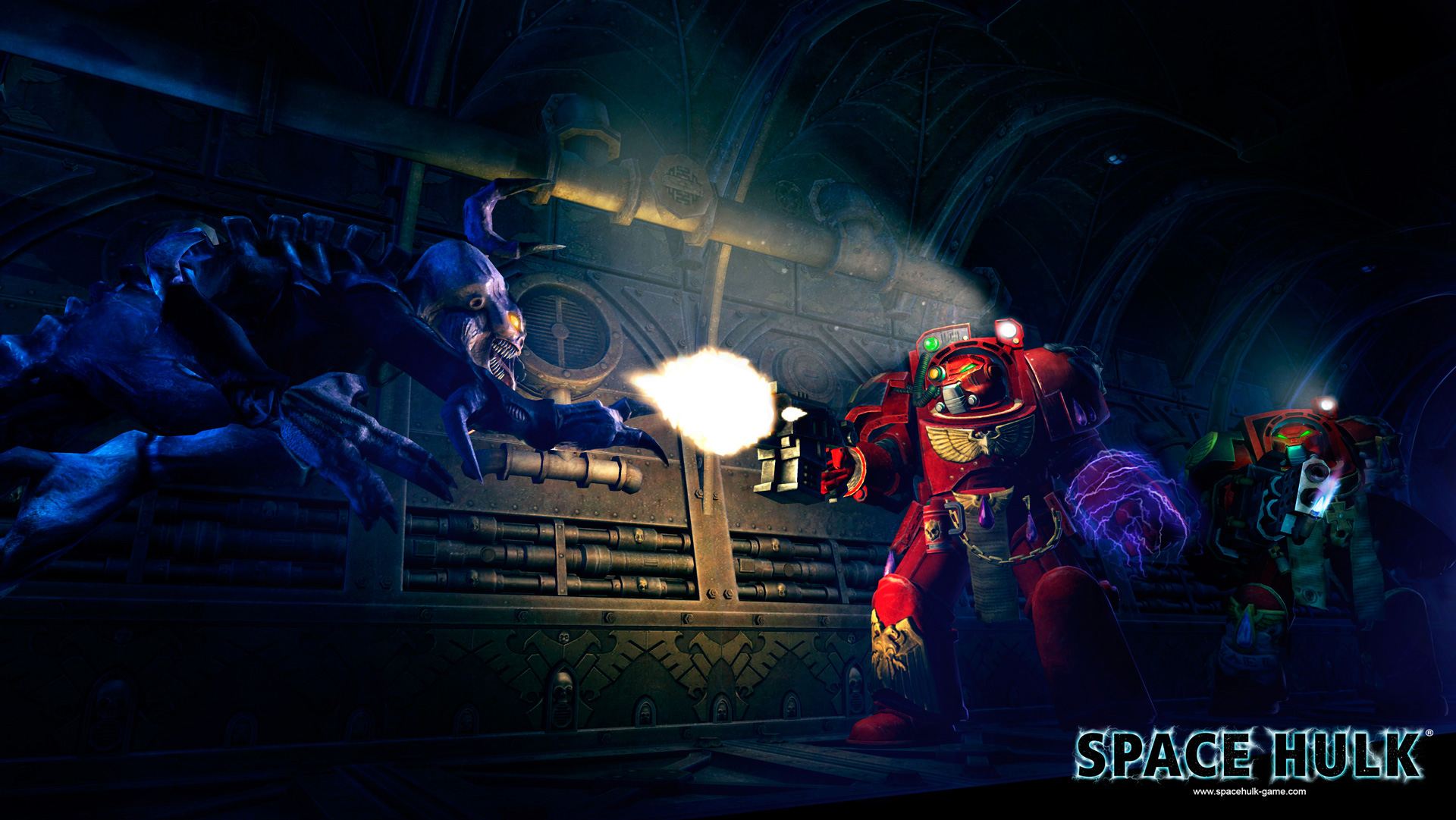

I love a good turn-based strategy game. Titles such X-COM and Civilization are some of the most well known definitions of the genre. I also enjoy a little tabletop gameplay from time to time, and the Warhammer 40K universe is definitely very deep in history and it offers some amazing opportunities for rich and spectacular games on both tabletop and keyboard. The original Space Hulk tabletop game has been around since 1989 and I have not had the privilege of playing it, my experience with 40K is still in its infancy. This electronic iteration of the game attempts to bring the experience of the board game, the tension between the Blood Angels and the Genestealers, into a brutally vicious computer game.

It does so, albeit poorly. The problem with the tabletop/pc transition is that half the fun is when you roll the dice, that black void of chance that may raise you up to victory or shun you to the depths of some bottomless pit. Instead, the computer spits out random numbers and you sit and watch; watching is not fun. With half the enjoyment of the game gone, there is nothing to fulfil that emptiness. As far as I’ve been told, it is a true copy of the tabletop game, so I can’t credit or discount them for any of the mission design. Though with that said, you get through them in about eight hours, which is significantly less than it would take on the table.
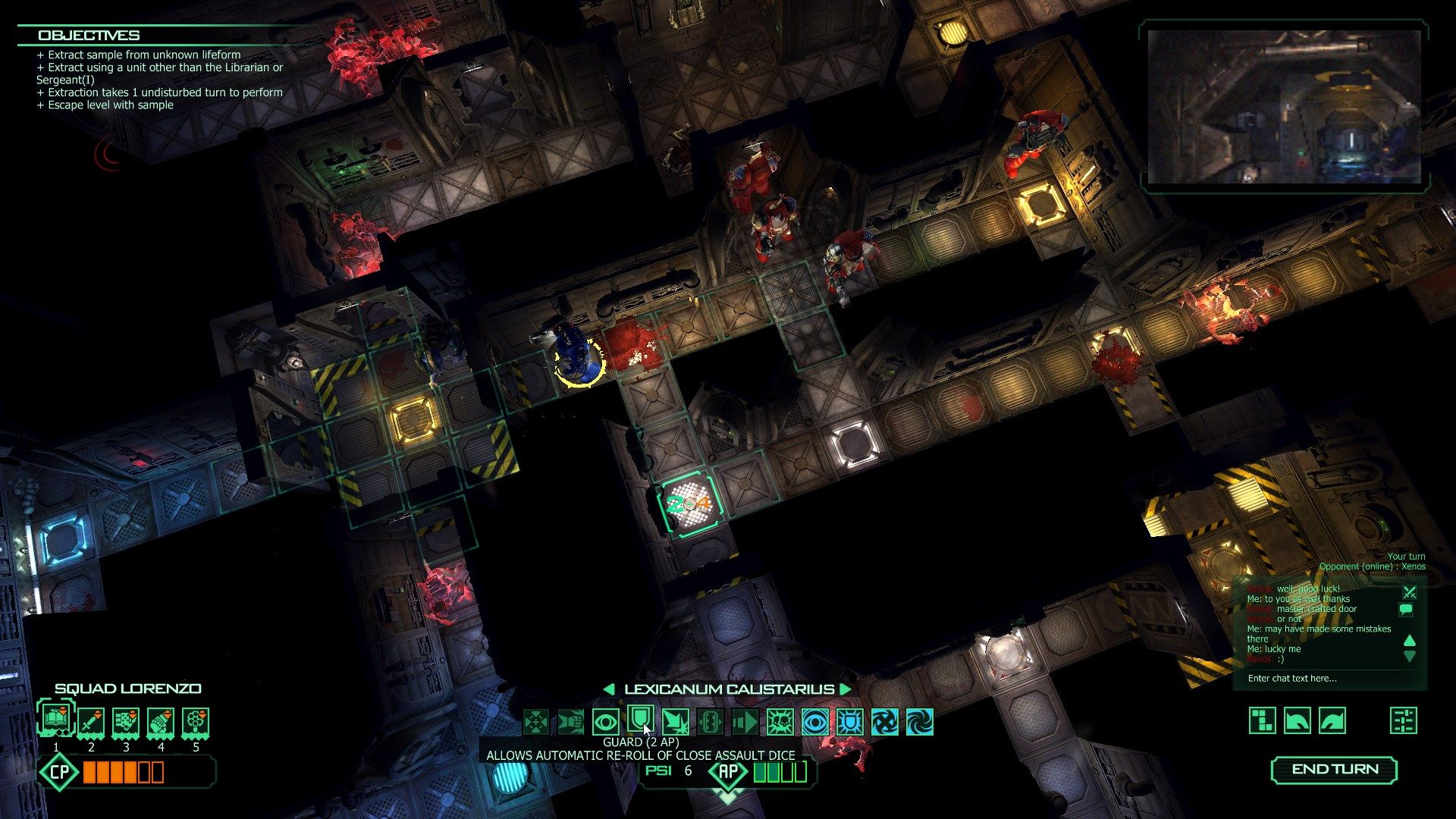


So with the game already designed by Games Workshop, perhaps the developers could focus on graphics and making it a great game to play? Perhaps not. I understand there have been numerous patches and fixes since release that may have addressed some of these issues that I have with the game, but let’s go through some when I played at release. Bullet effects skewed through walls rather than firing straight. I lost sound several times, requiring a restart. Constant miss-clicks causing undesired actions. Not registering that a Terminator had reached the exit. Spelling mistakes and once I had letters missing from words, requiring a restart. Animation glitches galore, the AI was dull and predicable and sometimes pathfinding broke, which caused the game to get stuck. The game was full of bugs and glitches and most weren’t game breaking, but some caused great frustration in an already tense game. Sadly, Space Hulk feels like it almost wasn’t tested and could have still been in beta. Always test, test and test everything in game design; many games have failed because of this mistake.

Art by Tremess http://tremess.deviantart.com/
I can’t finish this without at least giving some credit. There are some neat ideas they implemented, such as the suit camera that allowed you to see from the Terminator’s perspective. The game looks very good with the levels being very well detailed despite the design constraints, though I found some levels a bit unnecessarily dark.

Space Hulk was a great idea, attempting to bring to life a great concept, but it didn’t bring enough cards to the table to stand out. It also forgot its pants.

And there aren't any Orks in it. WAAAAAAGH!

Friday, August 16, 2013

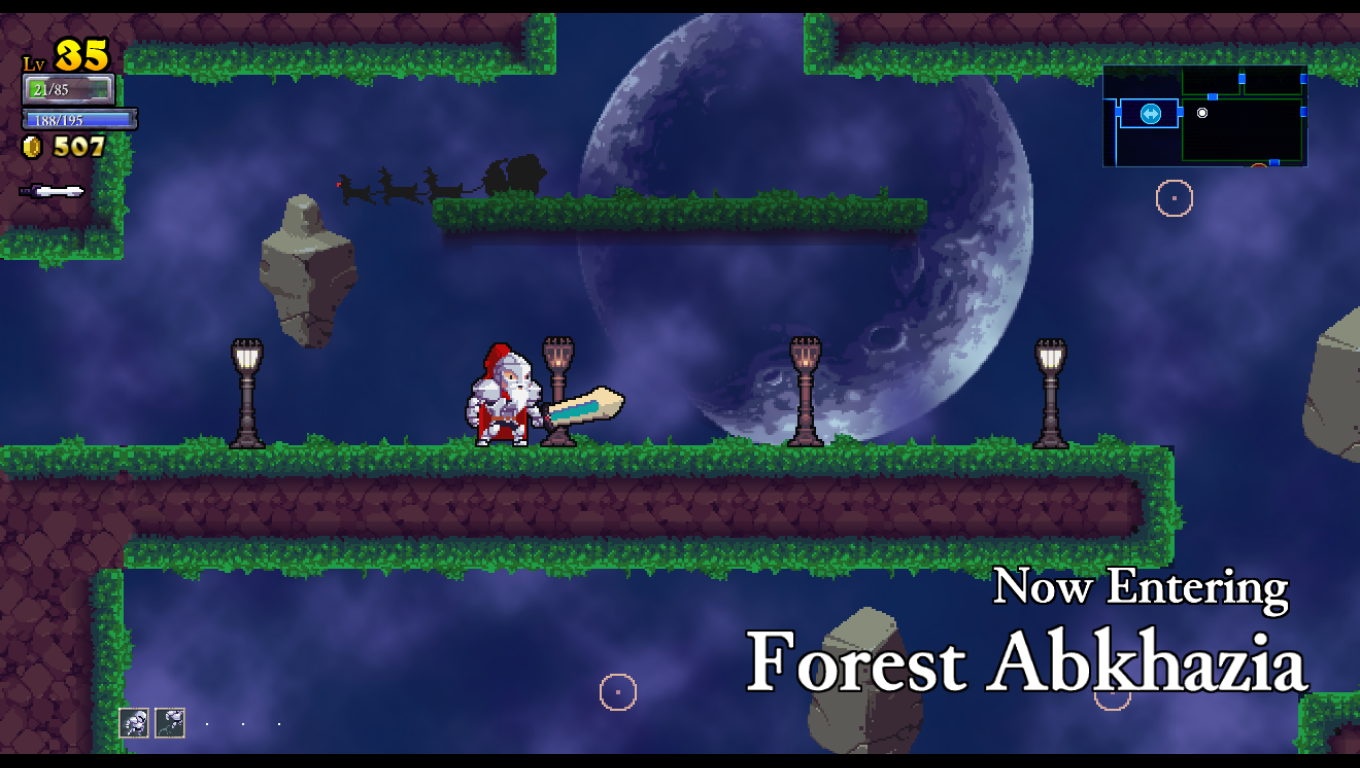
Review: Rogue Legacy


The only place where the Gay Dwarf with ADHD is king!

Rogue Legacy is an arcade-style platformer with an emphasis on fast-paced gameplay. Your father entered the castle in search of a cure for the ill king, paying Charon’s fee of all his family’s wealth to do so. Now his heirs must enter the castle and find out what happened to their father who never returned.


The goal of the game is simple; defeat the four bosses to unlock the door to the throne room. Reaching that goal is a mammoth task and you will fail many times in your enduring quest, but that won’t stop you. When you die, your children will carry on the quest, using the gold you earned in the castle to buy upgrades to the family castle (which in turn unlocks abilities and upgrades). With that said though, your children may not always be the most perfect of warriors, many of them will suffer or benefit from a variety of conditions and afflictions.

Each time you die, you must select one of three randomly generated children to be your heir. There are various classes and traits your children may have, but you can’t choose what you get except from the three picked out at random. There are many different classes which include Paladin, Mage, Lich as well as Awesome Dragon and while most need to be unlocked through upgrades, many have a second upgradable version to make them more powerful. Traits are also randomized and range from cosmetic afflictions such as baldness and Colour-blindness, to the more play altering conditions such as ADHD (move faster) and Muscle Weakness (enemies don’t get knocked back). You’ll learn to avoid certain traits that impair you too much, for me it was Vertigo, where the game turns itself upside-down. With most you can adjust your play-style to suit but some can be very useful such as O.C.D. which gives you a little mana when you break objects. The same goes for the classes with each one demanding its own play style, it’s up to you to find what suits you the most. For me, my preferred was the Hokage, the upgraded assassin, I was great at getting in close and getting the hits in, usually killing enemies before they could attack back.


The upgrade system is very well designed and suits the fast-paced gameplay perfectly. You can only upgrade after you die, and because you have to pay Charon’s fee (ie, all of your money) to get in the castle, you have to choose your upgrades carefully before each run to waste as little money as possible. You can also unlock the blacksmith and the enchantress to buy equipment and apply runes that you have found in the castle, these become essential later on. Various equipment applies different stats, and runes grant various bonuses such as extra mid-air jumps or health drain from enemies.

Rogue Legacy requires a controller; keyboard control will let you down greatly. The controls are fluid and feel right. There is a general arcade feel throughout the game and everything reflects this, from music to colourful graphics. The randomized castle rooms were a joy to run through and each area of the castle was superbly designed and generated. Completing the game unlocks New Game+ which fills the castle with the hardest enemies possible, just in case you weren’t getting killed often enough.

It’s great to have a fun game that is easy to pick up, sports a fresh design and reminds us of the old arcade games of the day.


Saturday, August 10, 2013

It was Minecraft


They say there was a man. A man who, while wearing crocs with socks and sitting in a bean bag chair, being as casual as possible, came up with the idea for the most casual game to ever exist. That man was Markis ‘Notch’ Persson; the game was Minecraft.


It’s hard to believe such a staple in game history is now over four years old. It was May 2009 when Minecraft showed its face to the world in Alpha. It wasn’t until November in 2011 when Minecraft hit full release, but by then it was too late. Minecraft sold almost two million copies before even being released, grossing an estimated USD$33. The company was founded, and Mojang, having never spent a cent on advertising, continued to build on the game it made a fortune from. With Minecraft 1.7 just around the corner, the tide of casualness is slowly subsiding with updates becoming less and less frequent. But then the community stepped in.

In my opinion, Minecraft is possibly one of the worst-built games of all time. Having been programmed with Java, one of the most flexible, but one of the most limited platforms, Minecraft could have been so much easier to work with. There is only so much Java can do, and they have pushed the platform so much it’s surprising the whole game hasn’t imploded. The main issue I have with java, is its poor allocation of RAM and the constant need to supply (and instruct) it to use the memory you have. Such a memory intensive game like Minecraft suffers greatly from the limits of Java. Not that the game is worse off for it, but I’m sure the developers are.

Then came the mods. With Java being such an accessible platform, the community were able to push Minecraft above and beyond breaking point. Want high-resolution textures? New mobs or how about extra vegetables? What about series of pocket dimentions or would you like to visit the moon? Sure, just wait an extra ten minutes to load the game and you’ve got it all! The community support is great, and now that Minecraft isn’t updating every few months and breaking every mod in existence each time it does so, the real potential of the community is available.


Now you can have whatever you want in Minecraft. You can participate in the Hunger Games, travel the ages of time or survive a zombie apocalypse. Download one of the stand-alone platforms to ensure uninterrupted and functional mod support such as one of the big staples: Tekkit and Technic.

Do I blame Minecraft for a surge in the number of casual games and copycats? Sure, but it would have happened one way or the other and the world isn’t worse off. In fact, the rise of more accessible games has sparked an increase in the number of people who play games. The people who can’t just sit down and play a high intensity FPS or RPG can easily jump on the computer or their mobile device and play a quick game of something quick and casual. It’s opening the industry to a wider market, and that will only help grow the developers.

Now if you’ll excuse me, I have a date with the moon.


Friday, August 2, 2013

Review: Antichamber

If there was ever a case of a game hating you for playing it, it would be Antichamber. It does a great many things to confuse, confound and twist your perspective, all the while presenting itself in the form of a very accessible and simple-looking puzzle game.


The goal is simple, escape the Antichamber. Overcome its blockades, looping corridors and psychological torments to find the tools you'll need to solve the puzzles. Despite its simplicity, it is one of the most confusing and difficult puzzle games I have played in a very long time. The puzzles themselves are difficult enough, but the game is out to throw you off at every turn. Hallways change when you're not looking at them, doors move, stairs loop back on themselves; not everything is as it first appears to be; but sometimes it is.

The main element of this game is the way you interact with the key element, the cubes. You'll obtain a tool that can pick up and place cubes, then it upgrades as you progress to grant you new abilities, which are essential to complete specific puzzles. The game starts of frustratingly difficult at first and is very intimidating. I stopped playing for a while after the first session because of just how mind-numbing it was; it's like an explorable M.C. Escher world.

When I returned, it became easier to comprehend, but no easier to complete. With so many red herrings and multiple paths to a specific point, much of this game is spent retracing your steps to find the paths you missed. Not that that's a bad thing, there a few little Easter eggs hidden around for you to discover.


This game is not for the faint-hearted nor the queasy stomachs, but the trill of actually making progress is truly fantastic. Antichamber puts the puzzle back into insanity.

Friday, July 19, 2013

400 Days Later

The first (and possibly only) DLC for Telltale's 'The Walking Dead' finally hit Steam, a over a year since the initial game's release. 400 Days is a short, chapter-based expansion, with each chapter featuring a new survivor at various periods during the zombie pandemic.


Each chapter will only take about 15 minutes at the most to complete, as well as the final scene. With only a short window to flesh out each character, Telltale did a great job of getting you to feel somewhat responsible and attached to your choices. They also hit you with some hard scenes that really stretch your moral compass.

With that said, it doesn't offer much more than handful of short stories that don't feel to have much impact on the overarching world. There are a few scenes where your choices from the original episodic story are reflected in these short chapters, but it has little effect as they don't impact how each chapter plays out at all, they are little more than set pieces.


400 Days is a great time waster, but the shortness and lack of cause and effect contributes to an underwhelming resolution. That aside, it functions much the same as the original game. It looks good and runs well, and they try out a few game-play features that mix it up a bit. 400 Days is definitely worth the one low price of $4.99 USD.

Thursday, July 11, 2013

Now Clean up your Mess

Very few games try the most amazing and daring things you've ever seen in a game and I've always loved the Indie and Mod scene for this very reason. It allows devs to 'cut loose' and try out whatever they want. Today I grabbed a bucket and tried out Viscera Cleanup Detail, the latest in gore-splattered cleaning simulators.


If you've ever played games like Dead Space, Resident Evil or one of the many other bloody and gory games out there, you know they leave a lot of mess. Blood splatters everywhere, giblets fly in all directions from your explosives and never mind about the various boxes and barrels being scattered like leaves in autumn on a windy day. Now you can take responsibility for your actions and actually clean up all that mess.

 
Viscera Cleanup Detail is exactly that. After a recent alien incursion aboard a space station is thwarted by a single stubborn and heroic survivor; to meet all safety and cleanliness requirements, you have been assigned a small section of the station to clean it spotless. Take your mop, bucket and trusty gloves and mop up all that blood, making sure you don't forget throw all those spent ammo shells and leftover body bits in the furnace.

It's still in ALPHA, so they are planning to add more to the game, but it is quite playable at the moment. I cleaned up in about 40 minutes, though I didn't get around to burning all the leftover boxes and metal plates. Cleaning isn't hard, nor is it that tedious. In fact, it's just the right amount of work without it feeling like a chore, with a few 'wtf' moments along the way.

You can download it from IndieDB here or follow the devs on Twitter.

You can also follow me on Twitter!

Friday, July 5, 2013

The Swapper - Review

When it comes to puzzle games, we've pretty much seen it all. Most games feature similar elements or various concepts that have been used and re-used many times. Despite this, some games just take already founded concepts, puts them together in a slightly different way, a bit of polish and you've got yourself a pretty decent game.


In a side-scrolling world, you find yourself on a desolate rock somewhere in the far reaches of space,  a short teleport away from the huge space station hovering in orbit above the planet. The story unfolds in fragments as you progress, coming together as you proceed further. Mysterious rocks known only as 'The Chain', act as a hive-mind-like consciousness that communicates telepathically when you get close. You find the last remaining survivor on the station, who, through her own mixed up way, guides you through the station. You can also find various terminals that reveal additional information about what happened to everyone on the station.

The Swapper combines some usual elements and some very different visuals to make such a unique and entertaining game. The base of this game is centered on a device know as 'The Swapper', a complex, yet not completely understood device that has the simple definition of being able to 'swap souls'. It also has the handy feature of creating 'soul-less' clones that mimic your every action and you can swap yourself into them to reach various places. You can have yourself and up to four living clones at a time, I say living because they can still die; as long as you're not in that body when it gets crushed or splatted all over the floor. You use these clones as tools to operate buttons or bypass hazards. As you progress, the puzzle element really comes into play as you explore to collect Security Orbs to operate terminals. Each orb is found in a puzzle room which must be solved using The Swapper. The game introduces elements such as gravity plates which let you walk on the ceiling, and coloured lights which restrict The Swapper from working. You can't create clones within blue light and red light blocks swapping between clones. The puzzle elements never get boring or tedious, the answer is always there, but finding it can be a real frustration. The simplicity of the game reminds you that it is possible, the only reason you can't do it is because you haven't figured it out. Many times I've rage-quit a puzzle, come back to it later and solved it almost immediately.


The design of the game is also a great feature, with many of the background elements created with clay-mation. The lighting and mood-setting in the game is also fantastic, it feels both meaningful, yet empty and alone. Despite the two-dimensional gameplay, the world feels very encompassing and complete. The world buzzes and groans with life, echoing down the corridors drawing you forward.

Many games either lack the challenge or throw tricks at you to trip you up on puzzles. There are a few sections in The Swapper that require quick fingers rather than brains, but it keeps the gameplay simple and always pushing the envelope each time. It's moody atmosphere intrigues, sometimes with only the echo of your footsteps to accompany you, and the crunch of your clones' bones as they die around you. There is around three or four hours of play here, but very enjoyable hours and well worth the $15.