Friday, September 27, 2013

Review: 1953 KGB Unleashed


There were many unusual and bizarre experiments by various nations in the early 20th century, many may know of Germany’s experiments with the supernatural as highlighted by games such as Wolfenstein. Seeking an edge over the enemy, these experiments ranged from EMP devices to spirit warfare and genetic mutation. 1953 – KGB Unleashed is set around supposed experiments during the escalating Cold War.

Warning! Spoilers ahead! But you already knew that.
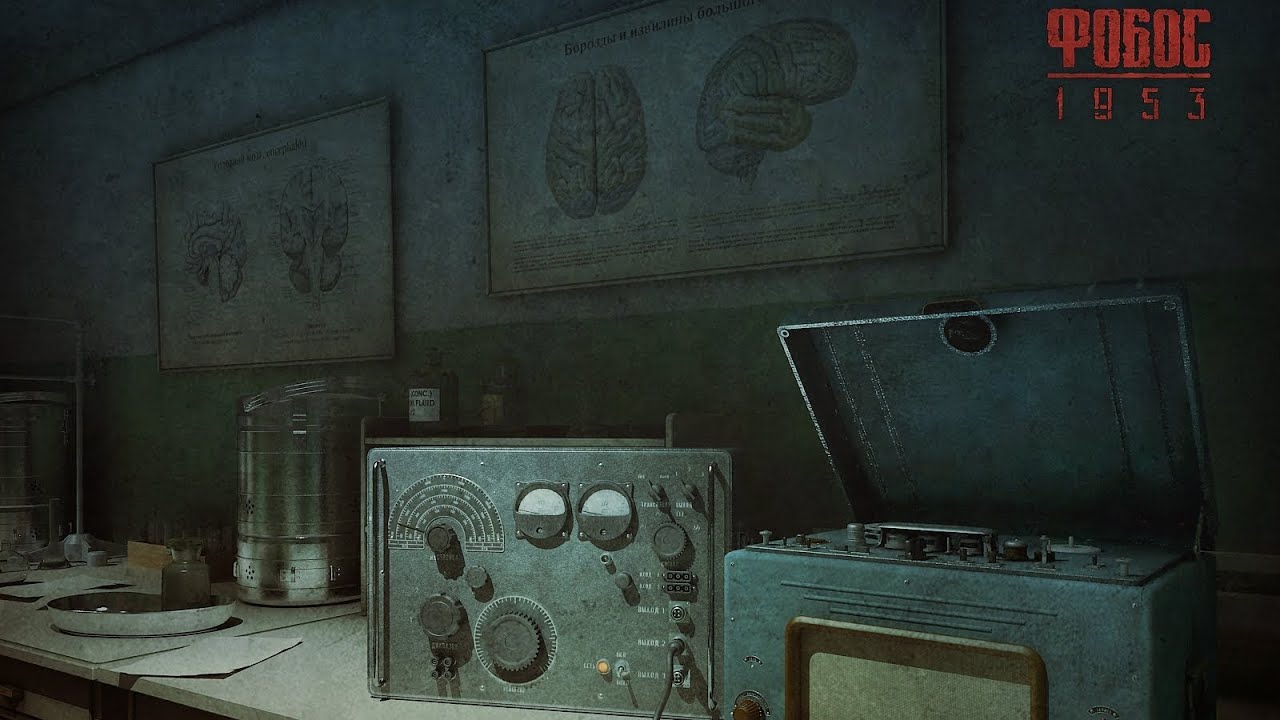


Although I couldn’t find much genuine information about the experiments, the game is set around a supposed series of real-life experiments conducted by Russian scientists during the 1950’s into the power of telekinesis and ‘spirits’. True or not, the oppressive and cruel nature of these experiments are revealed through various documents.

KGB Unleased is a first-person point-and-click adventure puzzle. Waking up alone in a room with no memory of how you got there, you must find your way out of the strangely deserted underground bunker. It’s the usual ‘amnesiac’ start, but it plays its part to the story well enough. You haven’t forgotten who you are, Gleb Ivanovich Nikolayev, a mechanic/engineer sent to the bunker to repair equipment within the facility. The rest of the details are hazy, but a few memories flicker back as you progress through the bunker.

I’ll be honest, I’m not the biggest fan of point-and-click games, but I do enjoy them on occasion. In KGB Unleashed it’s the usual journey of solving various puzzles and figuring out the meaning of various objects in each room. This game features more of the latter rather than the former. More often than not, I struggled to progress due to the obscurity of some elements, and despite the fact that I agree with the logic of each puzzle and the idea behind it, I believe it could have been far better designed. Many elements were misleading, or failed to emphasise the reason for its use. There are several examples I could give, one of which was a simple switch in a safe which gave no indication of what it did, yet it unlocked a door in another corridor that I did not realise until I had backtracked through most of the game to try and discover its purpose. In another part of the game, you have to descend a trap hole and there is a crate in the hole. Your cursor highlights to indicate there is something you need to do with the crate, but while I spent almost 10 minutes trying to open it, turns out it was actually where you had to put the tape recorder. Confusion like this could have been easily avoided by making the object anything other than a crate; a crate I had to break open not two rooms before.

I almost quit outright in frustration upon the first 10 minutes of starting the game. I don’t know if it was just my settings, but the initial two rooms are dark, so you have to strain your eyes to hardly see anything and the incessant alarm tone became annoying and headache inducing very quickly, beating the puzzles to the punch. The game significantly lacks any Russian undertones, with the main character voiced with an English accent. Aside from some radio stations and a few scraps of propaganda, the game could be set in the USA or England and you wouldn’t notice any difference.
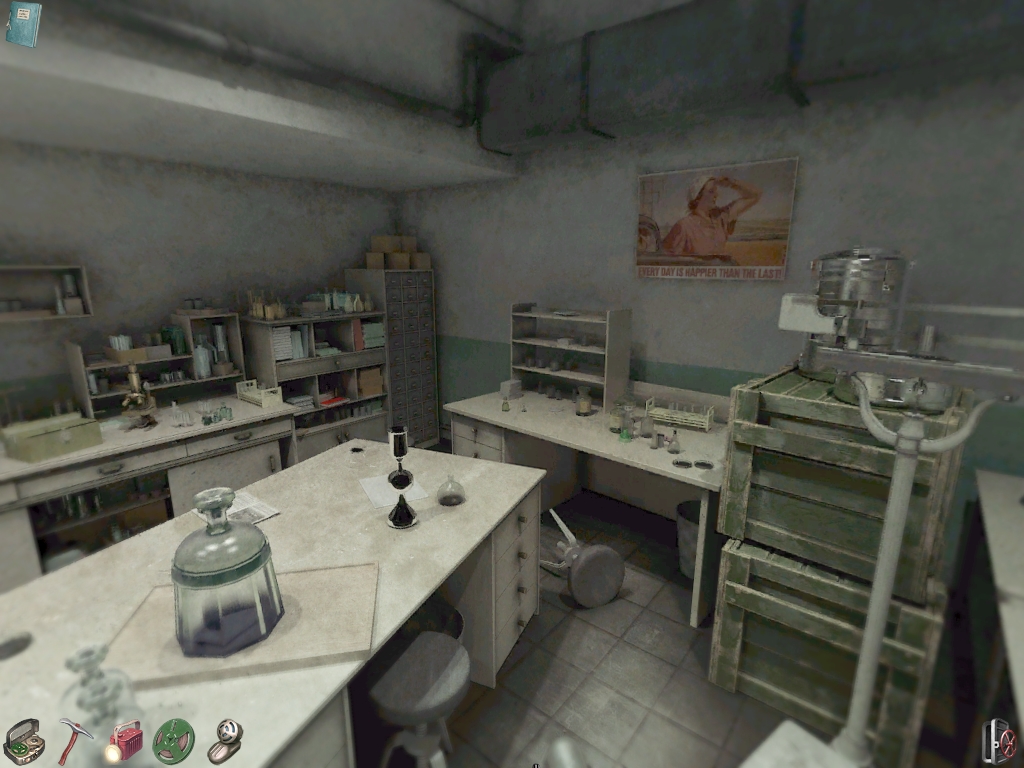

The ending became downright bizarre, ending very abruptly with little resolution. In the last area, you find a glass (hopefully) eyeball which you roll under a door. You can then look through the eyeball as if by magic and somehow that opens the door. Now here is a big spoiler for you, but the game stops, tells you that guy who has been talking to you is dead and then shoos you out the exit. The exit, by the way, is a subway tunnel that somehow goes directly into a bathroom and the wall just disappears after you pick up a subway token. It almost seems as though the developers gave up at this point, or just didn’t know how to end the game. It was an abrupt and confusing ending that severely jarred the experience.

Aside from me failing at puzzles, the game also failed on technical levels in many places. It’s very slow to load, which is very unusual for my high-end PC. It could take as long as ten seconds to load one room, yet I can load Fallout New Vegas with 50+ mods faster. It only had to do this once per room though, which reduced the annoyance, but it’s still unusual for a game of this era. I also had trouble with sluggish cutscenes that left me locked in the cutscene long after the dialouge ceased. There was also no option for subtitles, which was a bit problem for me when there was poor audio quality dialogue and I couldn’t understand what was said, making me miss what may have been important plot points.

The game looked decent, and the mood was set as it should have been, but it felt empty and void of any character. With constant backtracking to and from rooms, I tired from walking the same slow corridors over and over. It became a grind and that’s no fun at all.

An engine that just isn’t up to scratch, inconsistent gameplay and design ruined this game, which showed great potential. Some may enjoy the puzzles, I know some people who will get more satisfaction from games such as these than I do, but the price, the length of only a mere 2 or 3 hours coupled with all the letdowns made KGB Unleashed a great disappointment.

And where was all the Vodka? You can't have Russians without Vodka!

Friday, September 20, 2013

A Card in the Hand


Dungeons and monsters and loot, oh my! Don’t forget the precious loot. You can have all this and more in Blue Manchu’s great interpretation of the Dungeons and Dragons formula with Card Hunter.


So far I have slain only a few Kobolds and am still a mere pipsqueak compared to the great Heroes of Legend, but this flash game is more than mere skull bashing. It puts far more emphasis on strategy with a card-based system forcing you to plan your actions carefully for the best results.

Characters have action cards which you play to have them perform said action, and you draw a new set after the end of each combat round, which occurs when both sides of the combat pass their turn because they’ve got no cards left. What you get is random, you might not draw any movement cards leaving you stuck in a possibly bad position. Do you use your weak attack cards to flush out their defence cards or try to finish them off quickly? Has your ranged Spellcaster ended up in melee combat, perhaps your Priest has a handy card to shift them away? It will take clever use of your actions to keep your party members alive, especially during the harder battles, but the whole system is very well fleshed out, letting luck only determine your options, rather than your actions.

The whole premise is made even more fantastic with a cardboard-cutout style design, making it feel very much like a tabletop game. It comes loaded with effects, despite its flat appearance and so far I’ve found the levelling up characters to be both sensible while allowing a great deal of customisation for your personal tastes.


You can play Card Hunter for free, only account registration is required, here. There also isn’t much in the way of gimmicks yet (ie, microtransactions or advertisements), but they are there, but not imposing, which is nice.

Friday, September 13, 2013

Mobile Review: The Room

I went and did it. I actually paid for a mobile game. I always considered buying a mobile app to be a risky venture, mostly because of all the cheap ripoffs. Free apps usually nag you with ads, but I can get past that, they need to make money somehow after all. I always knew the notion of buying a game should mean that I got the whole game, and wouldn't be held back by micro-transactions and have ads waved in my face every few minutes. So this was my first app purchase, and it was fantastic.


The Room is a sequence of exploratory puzzle-boxes, each new box is found inside the box before, but a complicated series of mechanisms and secrets stand between you and the depths of the rabbit hole. It gets a whole lot trippy when you obtain the eyepiece; an unusual device that can perceive the unperceivable, to view holes in our dimension. Just when you thought the puzzle boxes were hard enough, added dimensional puzzles are just more mind-numbing clubs to whack your brain.

With that said, the puzzles are not ridiculously vague and all are both logical (the ones well within dimensional limits anyway) and all can be solved when you follow the sequence. The hardest point is usually when you start, but they solved this with the eyepiece revealing a fingerprint or other marking to hint you where to begin. Eventually, things start to get disturbing as dimensions begin bleeding into each other, and while not leaving you on a cliffhanger, the game will be continued in a second part. Despite the shoestring story, it is still effective enough to provide some sort of purpose that doesn't hurt the immersion of the game. You are following a man who perhaps ventured too far down the rabbit hole, in the hopes you don't end up lost like him.


On the tech side, I have a Galaxy S2, not the latest I know, but it still a damn good piece of hardware. The game looked amazing and had fantastic 3D rendered graphics. Even when zoomed in on a part of the puzzle box, it was still impressive quality for a mobile game. The clicks, whirrs and groans of the puzzle box are all very well done and provide a hearty feeling of satisfaction.

The Room, while not too easy, it doesn't frustrate, which I like in a puzzle game. It was shorter than I expected unfortunately, but the reasonable price of a dollar feels balanced for what you get. And you get a very impressive game that is going to at least chew up a few hours and give your brain that little bit of a bashing.

Friday, September 6, 2013

Review: Waking Mars


There have been many movies and games that have depicted life on mars. Some perhaps less alive and some from another dimension, but they all took place on mars nonetheless. I suppose when it comes to alien life, Mars is our next port of call, at least in our solar system. Since we’ve already looked on the moon, the Red Planet is the next most habitable planet that we can hope to find anything on. We’re still decades away from the technology to get there in any reasonable time, but Waking Mars depicts a ‘what-if’ scenario of the possible not-to-distant future of 2097 (but when haven't we said that before?).


With evidence of alien life discovered, a team is dispatched to venture into the depths of a massive cave system to make first contact. Deep inside, the explorers discover a developing alien ecosystem that has lain dormant for countless millennia. With the aid of a nifty jetpack you must navigate to the depths of the caves to find out the source of the alien growth.

Originally designed as an iOS game, Waking Mars received a PC release late last year. The side-scrolling puzzle platformer makes navigating the rocky caverns easier with a jetpack and requires that you carefully develop the alien ecosystem to your own needs to increase the biomass and open plant barricades. While you won’t be blasting everything in sight, that doesn’t mean you’re safe from danger. Some of the local flora is not as safe as you might expect and environmental hazards are your biggest threats. You’ll collect seeds and manipulate the growth of the environment by planting them in particular spots of fertile soil. The game slowly introduces additional plant-life that you can breed and further increase biomass. By the end, you learn the secrets of the ecosystem and why it’s here in the first place.


I don’t play very many space gardening simulators these days, my green thumb has been itching for some extra-terrestrial agriculture. The premise itself is simple enough, but requires some deep thought to actually master, which was quite enjoyable. The slow introduction of various new tools to solve those deeper problems was perfectly paced, though it would have been better to not introduce you to rooms that you couldn’t solve easily without said tools. I spent a good portion of my time fighting an uphill battle in a room I thought I was supposed to have passed to continue the game. The problem with an ecosystem simulator, is that it does just what a good ecosystem should, operate without you, sometimes to its own detriment. I had several rooms that would actually start killing off the ecosystem I had very carefully and painstakingly developed.

The progression of the story also became very confused at some point, with the first half of the game being a linear journey; it suddenly throws branching paths and optional quests into the mix. At that point, you can just head straight towards the exit, but miss out on some of the most important aspects of the story, which seemed a shame. It relies on you to have a genuine curiosity to find out the truth and with it having built a decent story up until that point it feels like the game is giving up on itself. A real shame, because the game does so well up to that point. The characters are well voiced, though their dialogue occasionally breaks the mood. The AI character ART was also an interesting addition to provide support during your exploration, but after a while it was grating and annoying and seemed to grow worse as the game went on. Occasionally the characters begin talking in scientific terms, and in the early game they do well to simplify it so you can understand, but by end game you’d need to be a space alien botanist to understand what they are talking about. Does that job even exist yet?


I definitely applaud the game for its unique idea and implementation, but the rest of the game pales in comparison. Considering the game was developed for mobile, the graphics are smart, but simple in design. It reminds me of paper cut-outs, similar to ‘And Yet It Moves’, but just trying much harder to not look that way. I got seven hours out of Waking Mars, which is pretty decent for a $10 game and although the rest of the game is pretty lackluster, the concept was new and enjoyable to experience.

Saturday, August 31, 2013

Review: Space Hulk


I’m definitely a huge supporter of smaller developers stepping out and taking on some daring ideas, turning them over and making some of my favourite games. Some even go out to out-play even AAA-titles like CoD, like Killing Floor. Don’t get me wrong though, there are plenty of indie games that flop like a soggy flannel, but considering I can buy five games made by independent developers over one name-brand developer’s game and the hit-miss ratio is about the same, I see Indie games as a much better alternative, and you still get those hidden gems. Space Hulk is not one of those gems.


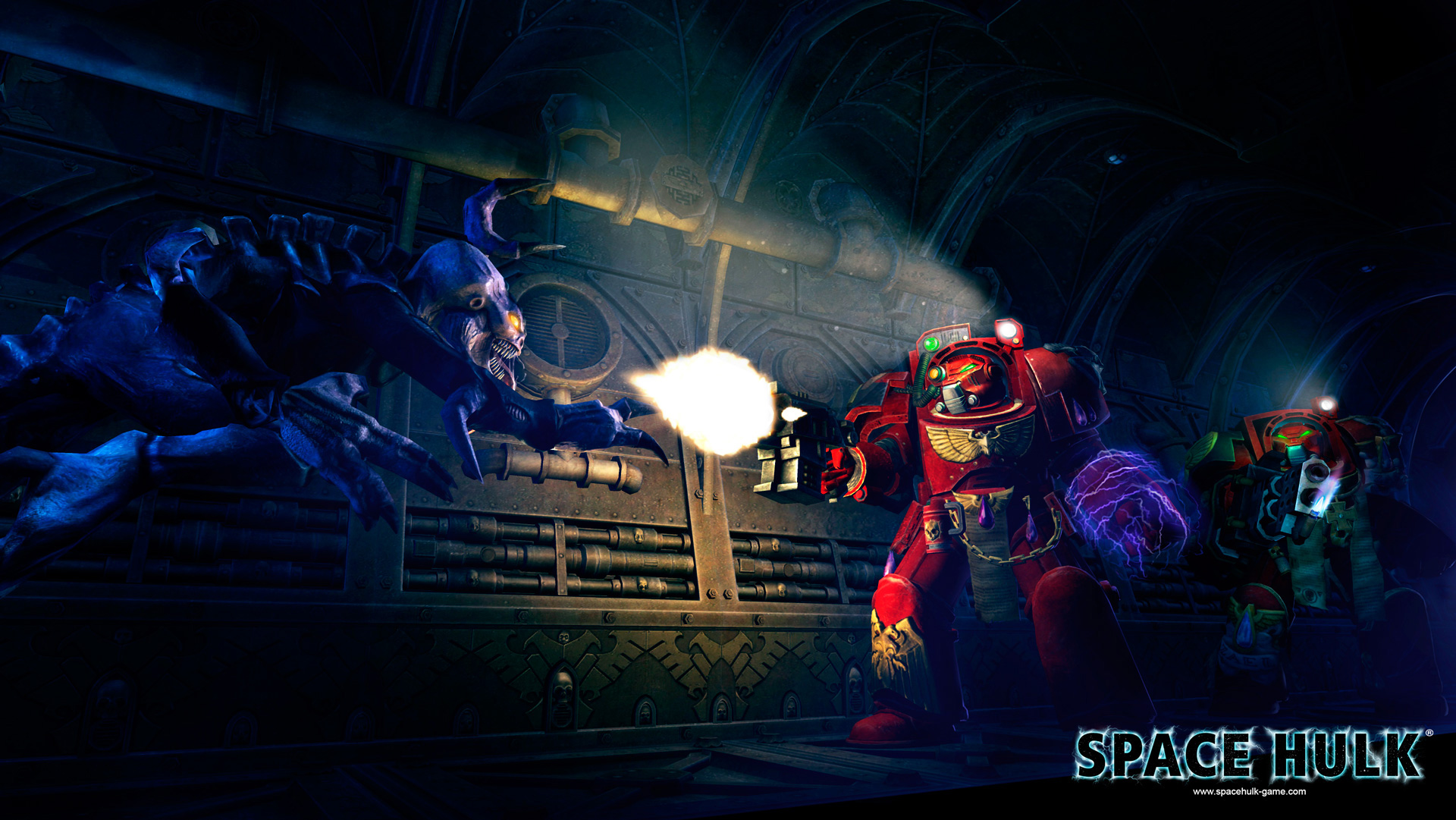
I love a good turn-based strategy game. Titles such X-COM and Civilization are some of the most well known definitions of the genre. I also enjoy a little tabletop gameplay from time to time, and the Warhammer 40K universe is definitely very deep in history and it offers some amazing opportunities for rich and spectacular games on both tabletop and keyboard. The original Space Hulk tabletop game has been around since 1989 and I have not had the privilege of playing it, my experience with 40K is still in its infancy. This electronic iteration of the game attempts to bring the experience of the board game, the tension between the Blood Angels and the Genestealers, into a brutally vicious computer game.

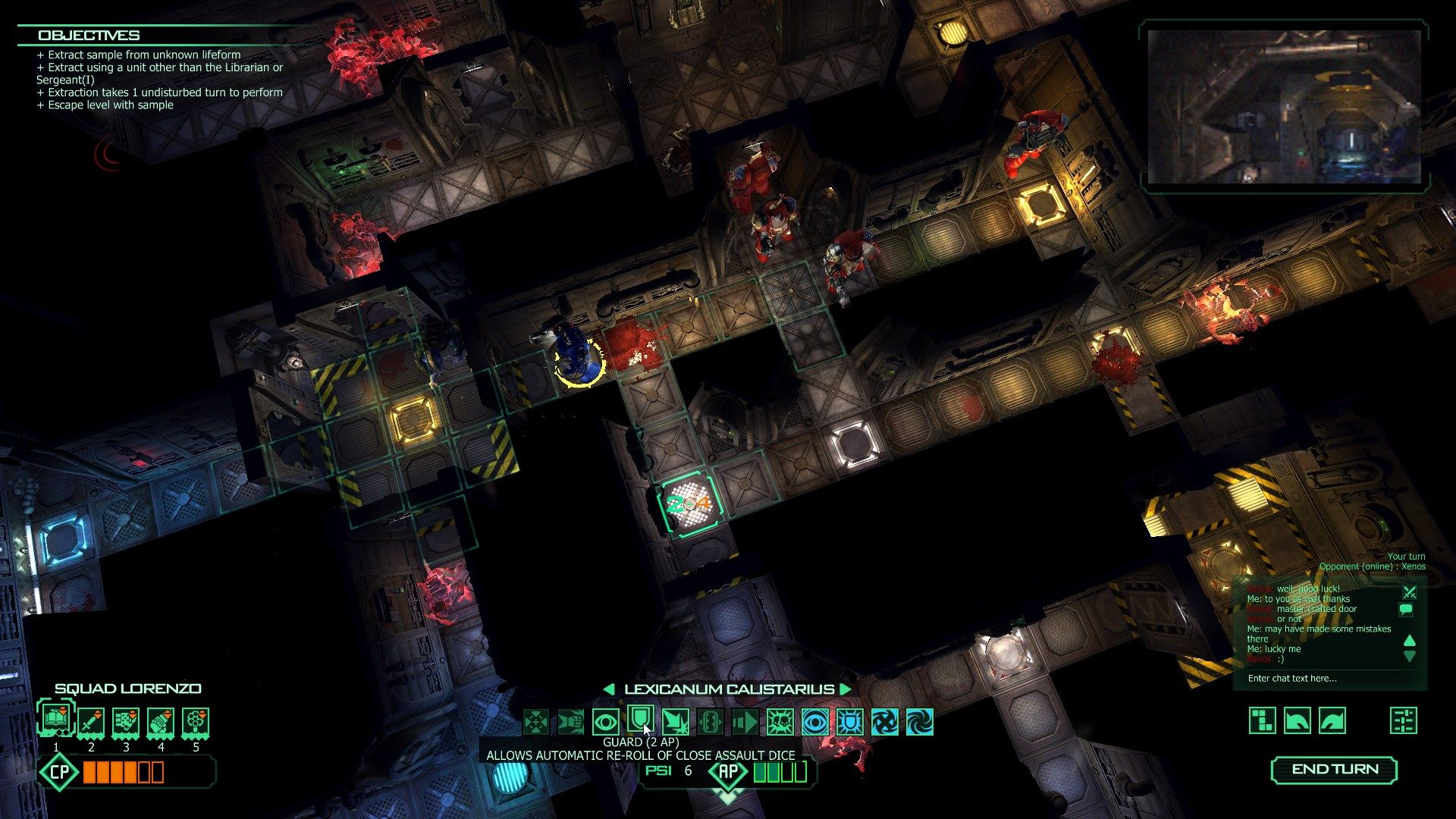
It does so, albeit poorly. The problem with the tabletop/pc transition is that half the fun is when you roll the dice, that black void of chance that may raise you up to victory or shun you to the depths of some bottomless pit. Instead, the computer spits out random numbers and you sit and watch; watching is not fun. With half the enjoyment of the game gone, there is nothing to fulfil that emptiness. As far as I’ve been told, it is a true copy of the tabletop game, so I can’t credit or discount them for any of the mission design. Though with that said, you get through them in about eight hours, which is significantly less than it would take on the table.


So with the game already designed by Games Workshop, perhaps the developers could focus on graphics and making it a great game to play? Perhaps not. I understand there have been numerous patches and fixes since release that may have addressed some of these issues that I have with the game, but let’s go through some when I played at release. Bullet effects skewed through walls rather than firing straight. I lost sound several times, requiring a restart. Constant miss-clicks causing undesired actions. Not registering that a Terminator had reached the exit. Spelling mistakes and once I had letters missing from words, requiring a restart. Animation glitches galore, the AI was dull and predicable and sometimes pathfinding broke, which caused the game to get stuck. The game was full of bugs and glitches and most weren’t game breaking, but some caused great frustration in an already tense game. Sadly, Space Hulk feels like it almost wasn’t tested and could have still been in beta. Always test, test and test everything in game design; many games have failed because of this mistake.

Art by Tremess http://tremess.deviantart.com/
I can’t finish this without at least giving some credit. There are some neat ideas they implemented, such as the suit camera that allowed you to see from the Terminator’s perspective. The game looks very good with the levels being very well detailed despite the design constraints, though I found some levels a bit unnecessarily dark.

Space Hulk was a great idea, attempting to bring to life a great concept, but it didn’t bring enough cards to the table to stand out. It also forgot its pants.

And there aren't any Orks in it. WAAAAAAGH!

Friday, August 16, 2013

Review: Rogue Legacy


The only place where the Gay Dwarf with ADHD is king!

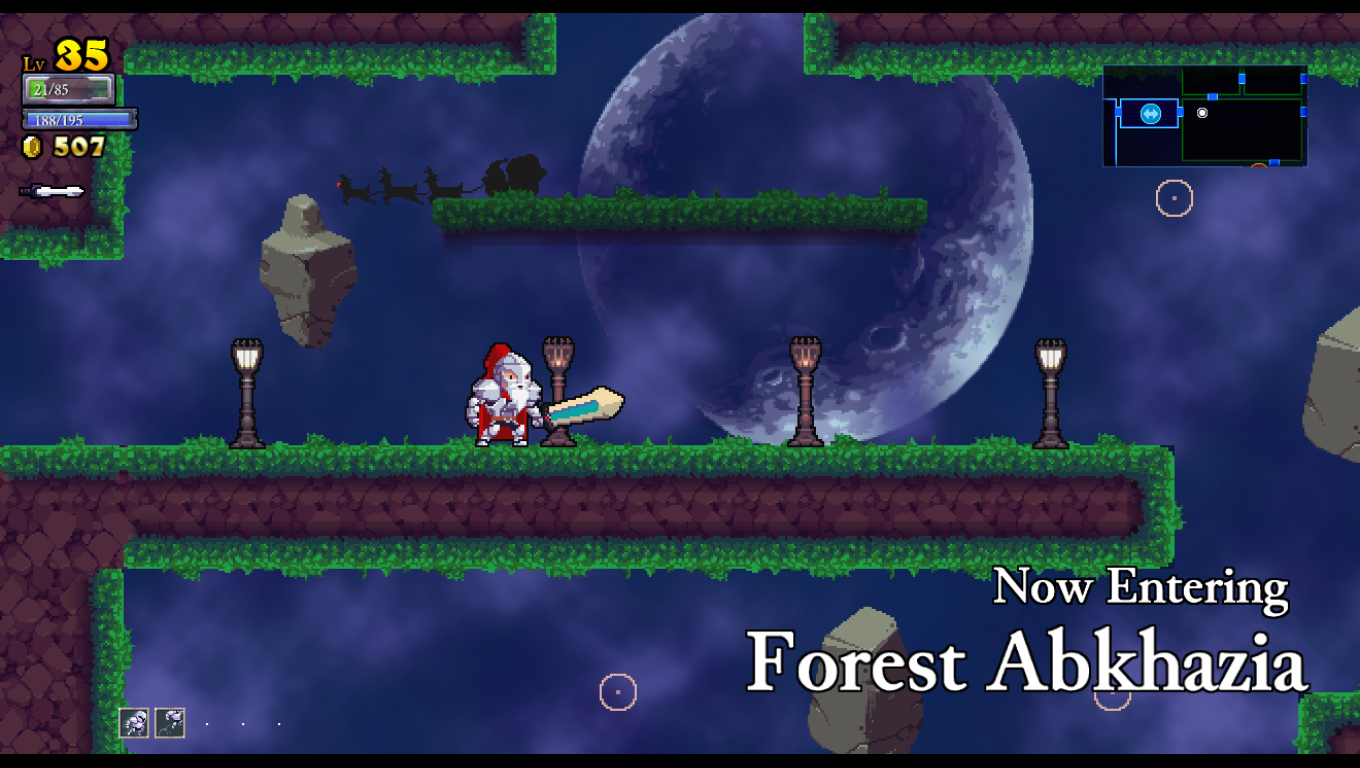
Rogue Legacy is an arcade-style platformer with an emphasis on fast-paced gameplay. Your father entered the castle in search of a cure for the ill king, paying Charon’s fee of all his family’s wealth to do so. Now his heirs must enter the castle and find out what happened to their father who never returned.


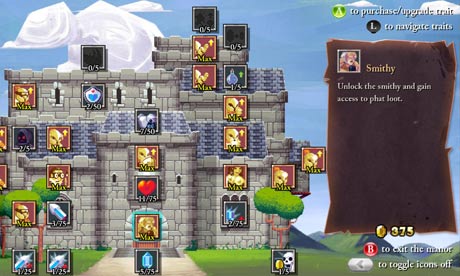
The goal of the game is simple; defeat the four bosses to unlock the door to the throne room. Reaching that goal is a mammoth task and you will fail many times in your enduring quest, but that won’t stop you. When you die, your children will carry on the quest, using the gold you earned in the castle to buy upgrades to the family castle (which in turn unlocks abilities and upgrades). With that said though, your children may not always be the most perfect of warriors, many of them will suffer or benefit from a variety of conditions and afflictions.

Each time you die, you must select one of three randomly generated children to be your heir. There are various classes and traits your children may have, but you can’t choose what you get except from the three picked out at random. There are many different classes which include Paladin, Mage, Lich as well as Awesome Dragon and while most need to be unlocked through upgrades, many have a second upgradable version to make them more powerful. Traits are also randomized and range from cosmetic afflictions such as baldness and Colour-blindness, to the more play altering conditions such as ADHD (move faster) and Muscle Weakness (enemies don’t get knocked back). You’ll learn to avoid certain traits that impair you too much, for me it was Vertigo, where the game turns itself upside-down. With most you can adjust your play-style to suit but some can be very useful such as O.C.D. which gives you a little mana when you break objects. The same goes for the classes with each one demanding its own play style, it’s up to you to find what suits you the most. For me, my preferred was the Hokage, the upgraded assassin, I was great at getting in close and getting the hits in, usually killing enemies before they could attack back.


The upgrade system is very well designed and suits the fast-paced gameplay perfectly. You can only upgrade after you die, and because you have to pay Charon’s fee (ie, all of your money) to get in the castle, you have to choose your upgrades carefully before each run to waste as little money as possible. You can also unlock the blacksmith and the enchantress to buy equipment and apply runes that you have found in the castle, these become essential later on. Various equipment applies different stats, and runes grant various bonuses such as extra mid-air jumps or health drain from enemies.

Rogue Legacy requires a controller; keyboard control will let you down greatly. The controls are fluid and feel right. There is a general arcade feel throughout the game and everything reflects this, from music to colourful graphics. The randomized castle rooms were a joy to run through and each area of the castle was superbly designed and generated. Completing the game unlocks New Game+ which fills the castle with the hardest enemies possible, just in case you weren’t getting killed often enough.

It’s great to have a fun game that is easy to pick up, sports a fresh design and reminds us of the old arcade games of the day.


Saturday, August 10, 2013

It was Minecraft


They say there was a man. A man who, while wearing crocs with socks and sitting in a bean bag chair, being as casual as possible, came up with the idea for the most casual game to ever exist. That man was Markis ‘Notch’ Persson; the game was Minecraft.


It’s hard to believe such a staple in game history is now over four years old. It was May 2009 when Minecraft showed its face to the world in Alpha. It wasn’t until November in 2011 when Minecraft hit full release, but by then it was too late. Minecraft sold almost two million copies before even being released, grossing an estimated USD$33. The company was founded, and Mojang, having never spent a cent on advertising, continued to build on the game it made a fortune from. With Minecraft 1.7 just around the corner, the tide of casualness is slowly subsiding with updates becoming less and less frequent. But then the community stepped in.

In my opinion, Minecraft is possibly one of the worst-built games of all time. Having been programmed with Java, one of the most flexible, but one of the most limited platforms, Minecraft could have been so much easier to work with. There is only so much Java can do, and they have pushed the platform so much it’s surprising the whole game hasn’t imploded. The main issue I have with java, is its poor allocation of RAM and the constant need to supply (and instruct) it to use the memory you have. Such a memory intensive game like Minecraft suffers greatly from the limits of Java. Not that the game is worse off for it, but I’m sure the developers are.

Then came the mods. With Java being such an accessible platform, the community were able to push Minecraft above and beyond breaking point. Want high-resolution textures? New mobs or how about extra vegetables? What about series of pocket dimentions or would you like to visit the moon? Sure, just wait an extra ten minutes to load the game and you’ve got it all! The community support is great, and now that Minecraft isn’t updating every few months and breaking every mod in existence each time it does so, the real potential of the community is available.


Now you can have whatever you want in Minecraft. You can participate in the Hunger Games, travel the ages of time or survive a zombie apocalypse. Download one of the stand-alone platforms to ensure uninterrupted and functional mod support such as one of the big staples: Tekkit and Technic.

Do I blame Minecraft for a surge in the number of casual games and copycats? Sure, but it would have happened one way or the other and the world isn’t worse off. In fact, the rise of more accessible games has sparked an increase in the number of people who play games. The people who can’t just sit down and play a high intensity FPS or RPG can easily jump on the computer or their mobile device and play a quick game of something quick and casual. It’s opening the industry to a wider market, and that will only help grow the developers.

Now if you’ll excuse me, I have a date with the moon.